What is a brand guide?
A brand guide is a reference document that defines how an organization presents itself — its logo, colors, typography, imagery, voice, and tone — so that every piece of content looks and sounds consistent, no matter who creates it.
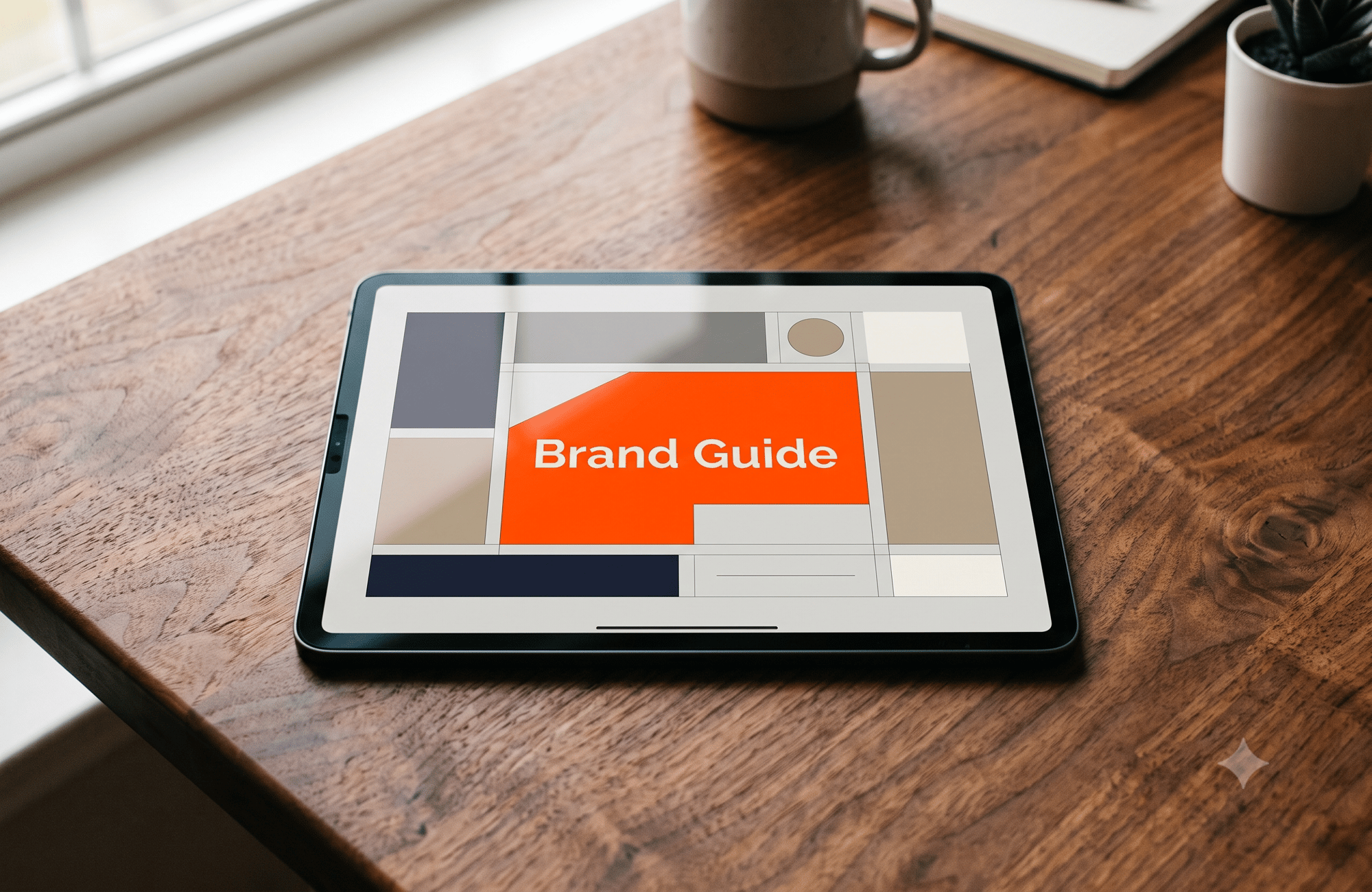
A brand guide is a reference document that defines how an organization presents itself — its logo, colors, typography, imagery, voice, and tone — so that every piece of content looks and sounds consistent, no matter who creates it. Also called a brand style guide or brand book, it translates a brand's identity into a clear, shareable set of rules that employees, agencies, and partners can follow. In everyday use, "brand guide" and "brand guidelines" are often treated as the same thing: the guide is the document, and the guidelines are the individual rules inside it.
What are brand guidelines?
Brand guidelines are the specific rules that govern how a brand is expressed across every channel and format. Where the brand guide is the container, the guidelines are its contents: the concrete do's and don'ts that keep a brand recognizable.
Brand guide vs. brand guidelines: The brand guide is the published document (often a PDF, web page, or online portal). Brand guidelines are the rules it contains, such as minimum logo size or approved color values.
Brand guide vs. brand guidelines: The brand guide is the published document (often a PDF, web page, or online portal). Brand guidelines are the rules it contains, such as minimum logo size or approved color values.
What the guidelines cover: Visual identity (logo, color, type, imagery) and verbal identity (voice, tone, messaging, terminology).
Who they serve: Anyone who creates or approves branded content: in-house marketers and designers, external agencies, resellers, and partners.
What brand guidelines are not: A brand guide is not a full brand strategy. It documents how to express the brand; the strategy defines why the brand exists and what it stands for.
Importance of brand guidelines in DAM
Brand guidelines matter most inside a DAM because that is where a brand's assets are stored, shared, and reused at scale. The DAM is where consistency is either enforced or lost. Managing guidelines alongside the assets they govern turns a library of files into a governed, recognizable brand.
Consistency across channels: When the guidelines and the approved assets live in the same DAM, every touchpoint — website, social, packaging, sales decks, ads — draws from one on-brand source.
Faster content production: Teams and agencies find current, rule-compliant assets in the DAM instead of guessing or recreating them, removing rounds of review and rework.
Stronger brand recognition: Centralizing approved logos, colors, and templates in the DAM ensures the same brand elements are reused everywhere, building memory and trust over time.
Easier scaling: Self-service, permission-scoped access lets new hires, regional teams, and external partners pull on-brand assets from the DAM without direct oversight from the brand team.
Protected brand equity: DAM permissions and version control keep outdated or off-brand files out of circulation, preventing use that can dilute or damage the brand.
Fewer legal and compliance risks: Rights and expiration metadata in the DAM flag assets that are no longer licensed or approved, reducing the chance of costly logo, trademark, or usage mistakes.
Brand guidelines development: How to create a brand guide
Creating a brand guide is a step-by-step process of defining your brand's identity, documenting the rules, and making them easy to follow. The following sequence covers brand guideline development from start to finish.
- Clarify the brand foundation: Confirm the mission, values, audience, and personality the guidelines will express.
- Audit existing assets: Review current logos, colors, fonts, and content to see what is working and where inconsistencies exist.
- Define the visual identity: Set the rules for logo, color, typography, imagery, and layout.
- Define the verbal identity: Document voice, tone, messaging, and terminology, with examples.
- Add usage rules and examples: Show correct and incorrect applications so the rules are unambiguous.
- Structure the document: Organize the guide so users can quickly find the section they need.
- Review and approve: Circulate the draft to brand, legal, and executive stakeholders for sign-off.
- Publish and distribute: Make the guide available where teams and partners actually work, such as in a DAM.
- Maintain and version: Assign an owner and a review cadence so the guide stays current as the brand evolves.
How to implement brand guidelines in a DAM
A digital asset management (DAM) system implements brand guidelines by storing them alongside the approved assets they govern, distributing them to the people who need them, and enforcing the rules that keep usage on-brand. A DAM is a central library for managing, organizing, and sharing digital files, which makes it a natural home for both the brand guide and the assets it describes.
Storing brand guidelines
A DAM can hold the brand guide itself (as a document or web page) next to the logos, fonts, color assets, and templates it references, so the rules and the raw materials live in one place.
Metadata and tagging make guidelines and on-brand assets easy to search and retrieve.
Version control keeps a single, current source of truth and preserves the history of past versions.
Distributing brand guidelines
A DAM gives internal teams, agencies, and partners self-service access to approved, current assets, reducing off-brand use of outdated files.
In OrangeLogic, the Spaces feature provides branded hubs within the DAM: tailored, permission-scoped entry points where a specific team or external partner can find the guidelines and assets relevant to them.
Common brand guideline challenges
The main challenge with brand guidelines is keeping them current, findable, and actually followed. The lists below cover the common obstacles and the practices that address them.
Guidelines that go stale: Documents drift out of date as the brand evolves and are not revised.
Poor findability: Teams can't locate the current version, so they reuse old files or improvise.
Low adoption: Rules are ignored when they are unclear, hard to access, or feel disconnected from daily work.
Version confusion: Multiple copies circulate, and no one is sure which is authoritative.
Inconsistent enforcement: Without controls, off-brand content slips through, especially across regions and partners.
Brand guideline best practices
Assign a clear owner: Give one person or team responsibility for maintaining the guide.
Set a review cadence: Schedule regular updates so the guidelines stay current.
Keep a single source of truth: Maintain one authoritative, versioned copy rather than scattered files.
Make it easy to access: Put the guidelines where people work, alongside the assets they govern.
Show, don't just tell: Include real examples of correct and incorrect usage.
Pair guidelines with governance: Use permissions and, where available, automated compliance checks to make the rules enforceable in your digital asset management platform.
Summary
A brand guide is the document that defines how a brand looks, sounds, and behaves; brand guidelines are the specific rules inside it. Together they keep a brand consistent, recognizable, and protected as different groups, like employees, agencies, and partners, create content for the brand. A strong guide covers the brand's visual and verbal identity, is built through a clear development process, and is kept current by an assigned owner. Managing guidelines in a DAM extends their value: the rules and approved assets live in one governed place, reach the right audiences through controlled distribution, and stay enforceable through permissions and version control.
