

MAKE DIGITAL COLLECTION MANAGEMENT EASY TO EXPLORE
Turn boxes of digitized history and hours of unwatched footage into a collection researchers can explore.

.png?width=350&height=207&name=OrangeLogic_canadian-museum-human-rights-horizontal-white-transparent%20(1).png)
OPEN UP YEARS
OF ARCHIVAL WORK
Your collections span decades of photographs, film, and sound. Orange Logic makes all of it searchable in plain language, so a researcher can find a moment in a 40-year-old interview as easily as last week's event photos.
The system works the way your archivists already do. It follows your institution's structure and vocabularies and pulls catalog data straight from your collections management system. OAIS-compliant preservation runs on the same platform.
When it's time to open the doors, each audience sees what its access allows, and more of the collection can open as rights clear.

I could just sit here all day and list off all the things that Orange Logic is allowing us to do that we previously have never been able to.”
— Emily Wittenberg, Archivist, American Film Institute

COLLECTION INGEST
UNITE DIGITIZED RECORDS
WITH YOUR BORN-DIGITAL COLLECTION
Whether you're ingesting one donor's collection or working through a decades-long backlog, your assets go into one repository your whole institution can search.
- Ingest film and audio. Bring video and audio collections into the same system as images and documents.
- Migrate existing records. Carry metadata over from legacy platforms so cataloging work arrives with files.
- Organize on arrival. Apply collection structures and metadata as assets enter the archive.
The footage you digitize next year sits right beside photographs from 1920, ready to turn up in the same search.
ARCHIVAL METADATA
DESCRIBE COLLECTIONS
IN YOUR OWN TERMS
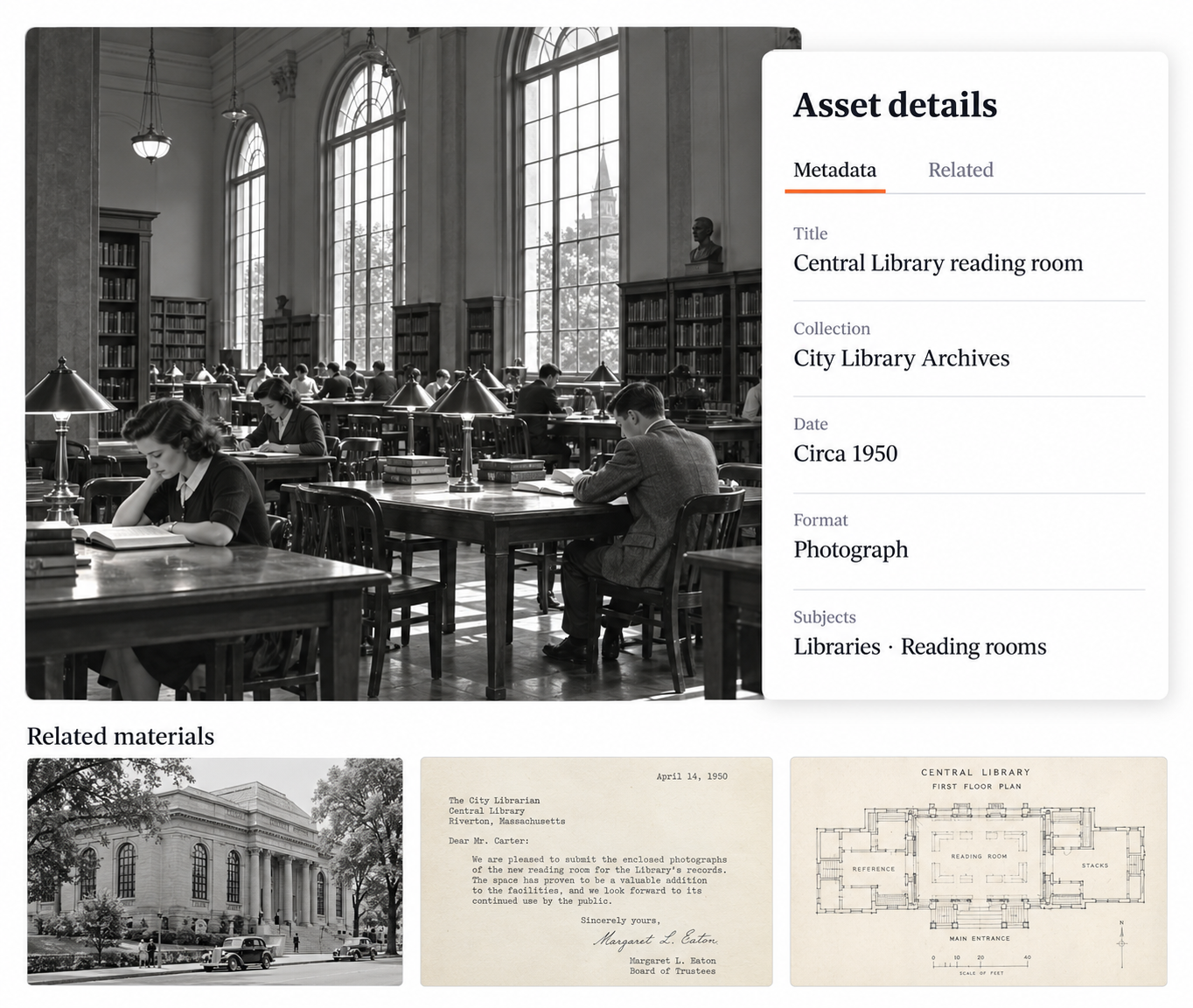
Configure metadata fields and taxonomy around the descriptive standards your institution follows.
- Sync your catalog. Keep records aligned with ArchivesSpace or another collections management system.
- Match the physical collection. Organize assets by collection, series, and folder, preserving the original order.
- Keep relationships intact. Link related materials so each item stays tied to the collection it came from.
Finding things becomes the quick part of research, leaving more room for the discoveries that matter.
AI-ASSISTED ARCHIVING
CATALOG FASTER WITH AI
UNDER AN ARCHIVIST’S REVIEW
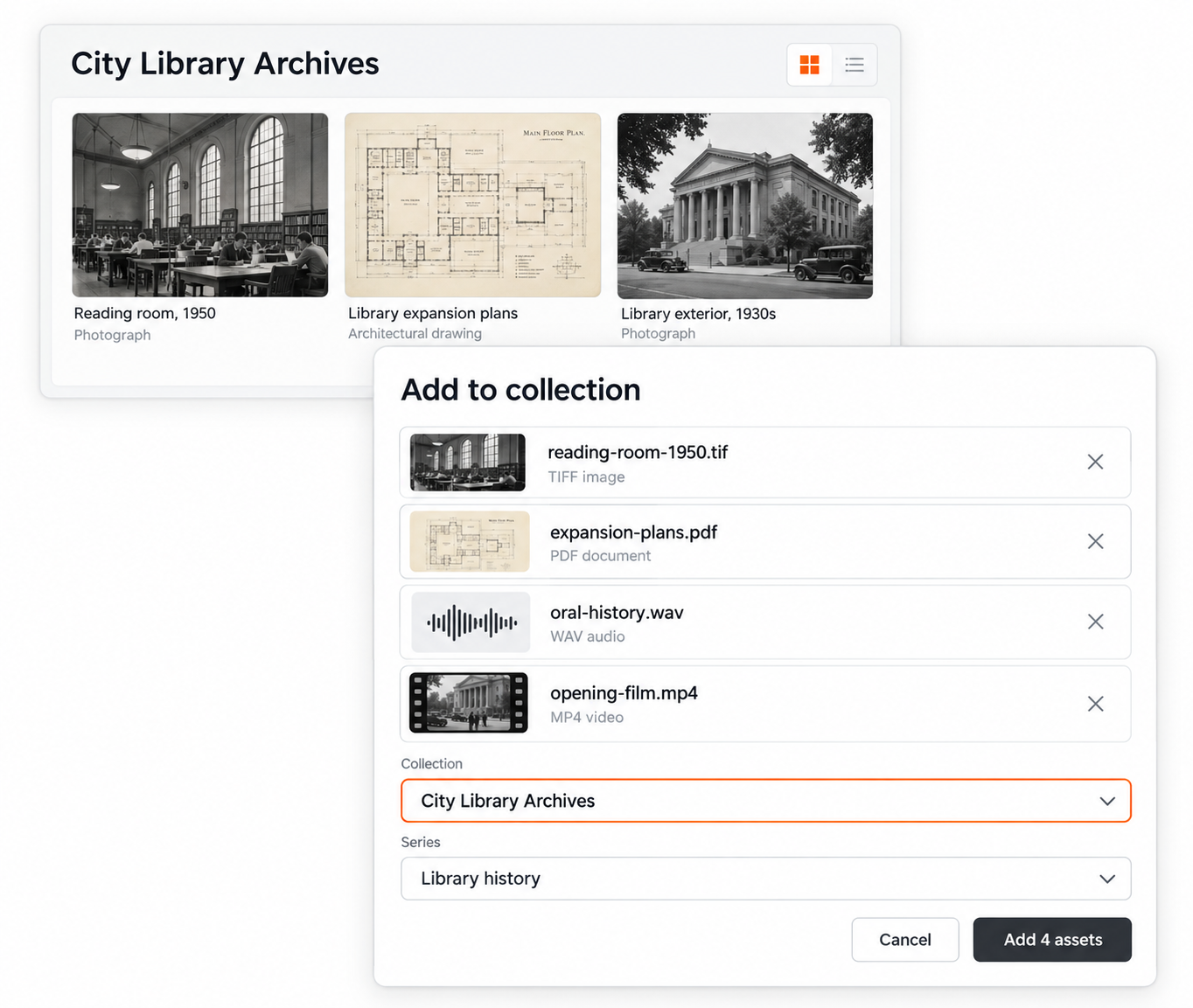
Use AI to speed up repetitive cataloging while librarians and archivists decide how each collection is described.
- Set the level of oversight. Review suggestions closely on sensitive collections and let AI work on its own across large batches.
- Make media searchable. Use OCR and transcription to turn the words in documents, audio, and video into text you can search.
- Tag assets faster. Let AI generate tags and descriptions for visual assets, drawing on your own taxonomy.
Hand off the routine calls to AI and focus on the appraisal and access decisions only an archivist can make.
COLLECTION DISCOVERY
DECADES OF MATERIAL
ONE SEARCH AWAY
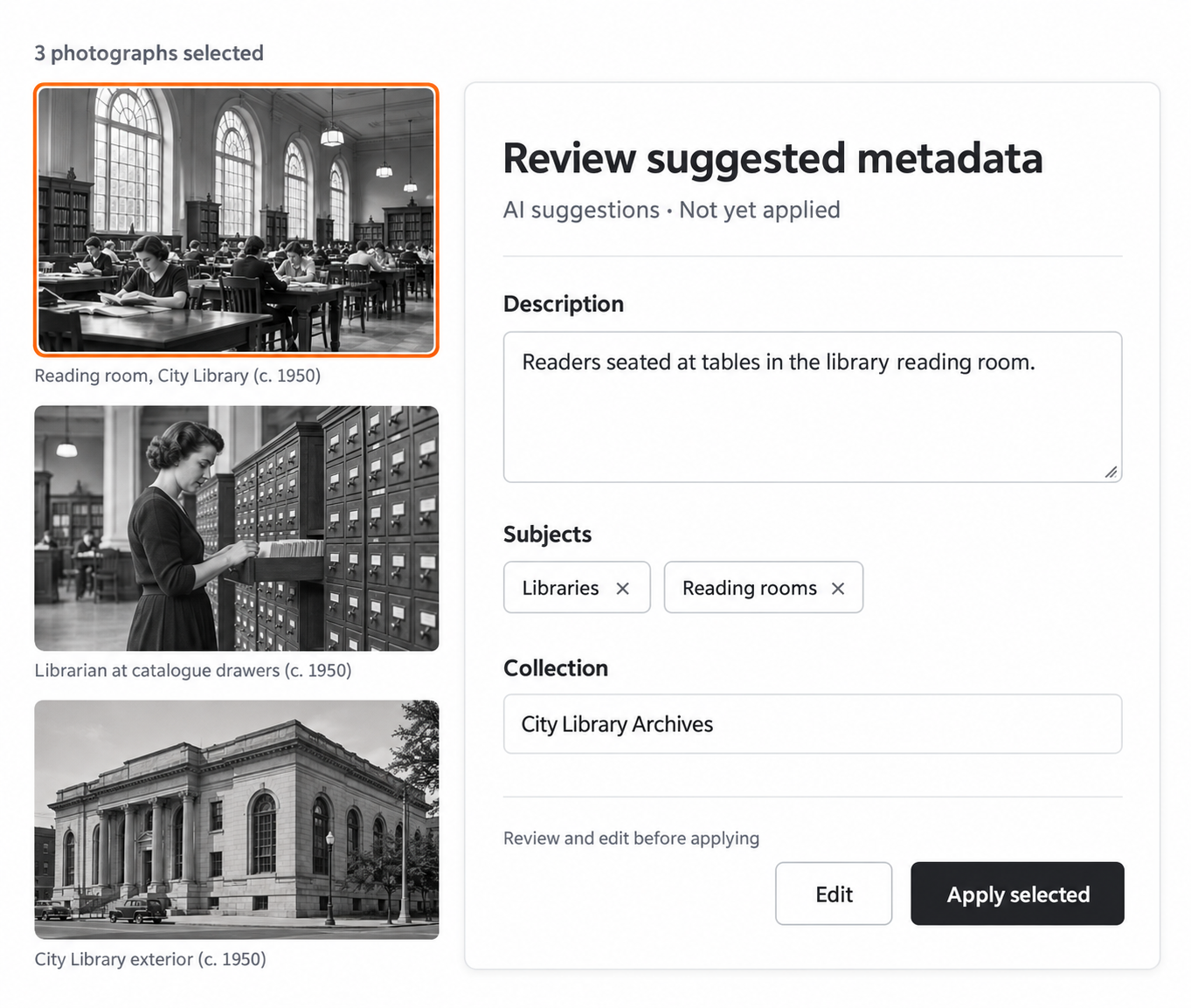
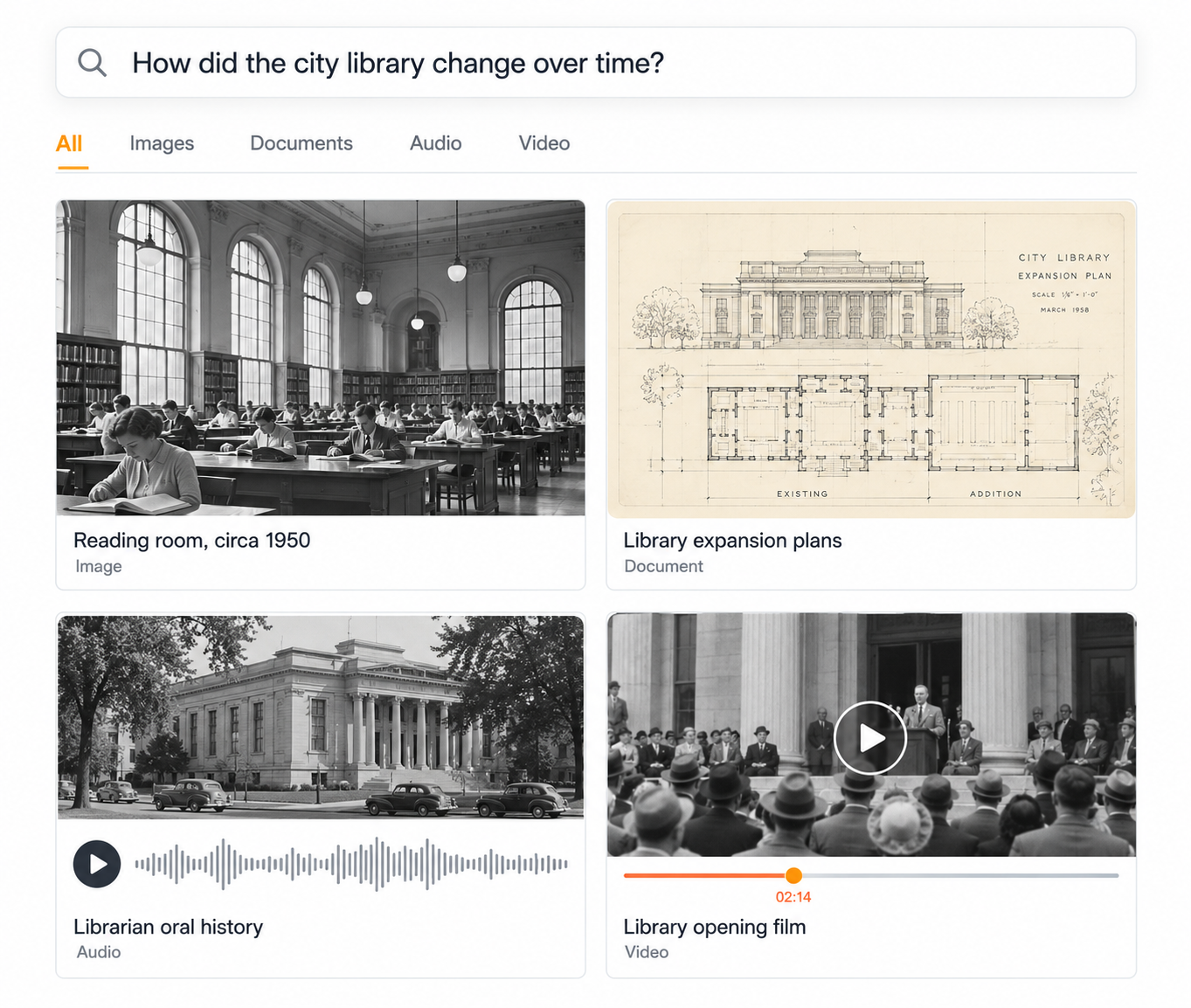
Help staff and researchers find what they need without knowing a filename, folder, or metadata field.
- Search by meaning. Type a question in everyday language and get results that match what you meant.
- Search inside recordings. Jump to the moment a name is spoken or a face appears in hours of audio and video.
- Follow the connections. Surface related assets from other collections alongside each result.
Make more material available without giving up the controls responsible stewardship requires.
COLLECTION GOVERNANCE
RIGHTS AND RESTRICTIONS
BUILT INTO EVERY ASSET
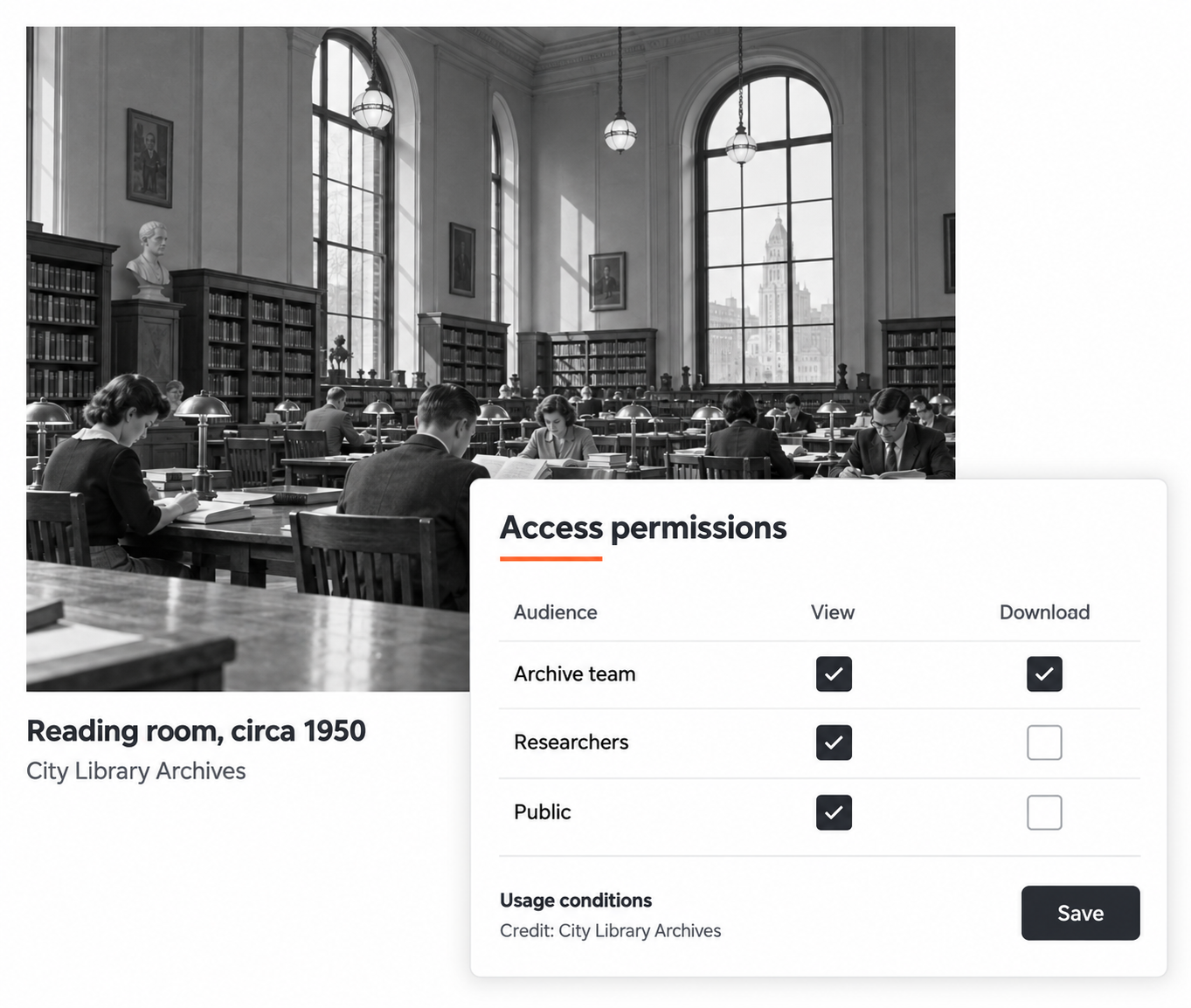
Expand access to archival material while honoring copyright, donor restrictions, and sensitive content.
- Set access at any level. Decide who can find, view, or download material, from a whole collection down to a single item.
- Record usage conditions. Attach rights, restrictions, and embargo dates to the assets they govern.
- Automate expirations. Move assets to cold storage when terms of use end while keeping them searchable and requestable.
When restrictions are applied automatically, donors and rights holders can trust their terms will be honored, and that trust makes the next gift or the next partnership easier to secure.
COLLECTION ACCESS
GIVE EVERY AUDIENCE
ITS OWN COLLECTION VIEW
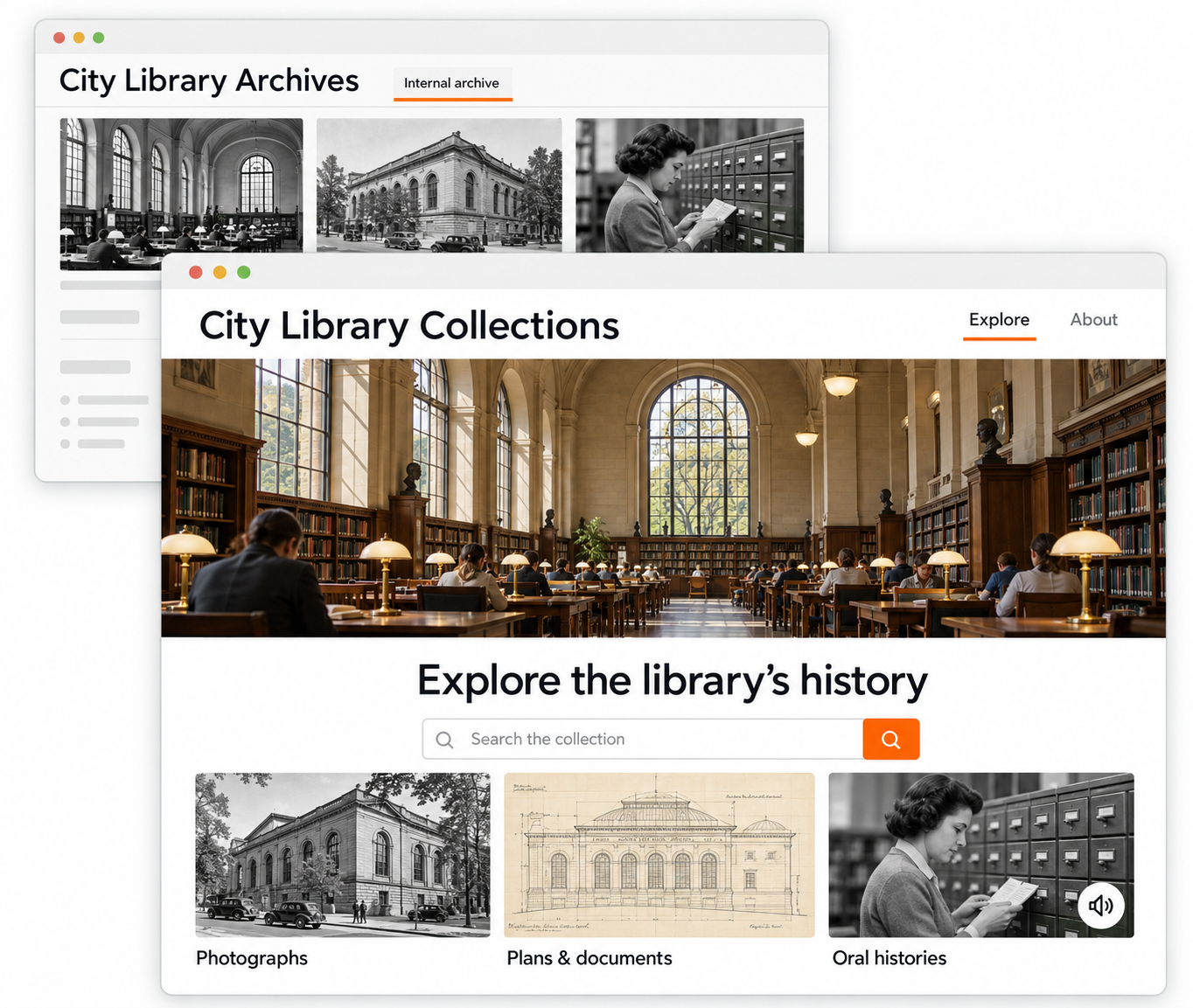
Publish curated collections for staff, researchers, or the public from the same governed source.
- Curate what people see. Present selected collections without exposing the entire archive.
- Launch a portal for any purpose. Create as many as you need, whether for internal or external use.
- Connect with other collections. Share images through IIIF so scholars can compare your material with holdings from other institutions.
Each collection reaches the people meant to see it, whether that's a single research team or the whole world.
CUSTOMER SUCCESS STORIES
See how organizations preserve valuable collections and make them easier to discover and use.

Case Studies
Carnegie Hall Archives Story
Carnegie Hall preserved its digital archives with Orange Logic and opened them to the public with an online portal.

Case Studies
AFI Opens Millions of Assets to Its Staff
With AI in its DAM, AFI opened millions of film assets to its whole staff for the first time.

Case Studies
Headspace Cuts Third-Party Storage Costs 60%
How Headspace reduced its third-party storage costs by 60% with the Orange Logic DAM platform.