

DIGITAL ASSET SEARCH & DISCOVERY
FIND THE RIGHT CONTENT, HOWEVER YOU LOOK FOR IT
Search across massive content libraries whether you know the exact asset, can describe what you have in mind, remember a moment inside a video, or simply know what you need to accomplish. Sub-second search across libraries exceeding 100 million assets.

MORE WAYS TO FIND
SEARCH WHAT YOU KNOW
DESCRIBE WHAT YOU DON'T
Sometimes you know the exact SKU, filename, campaign, or date. Other times you only remember what something looked like or have an idea of the content you need. Orange Logic gives people the precision of structured search and the flexibility of AI-powered discovery in the same DAM.
- Get exact when exact matters. Search metadata, product IDs, dates, fields, synonyms, Boolean criteria, and other known information.
- Describe what you have in mind. Use natural language and semantic search when you do not know the exact terminology or tags.
- Start with something similar. Use an existing asset to uncover visually or conceptually related content.
Find content based on what you know, instead of what the DAM expects you to know.
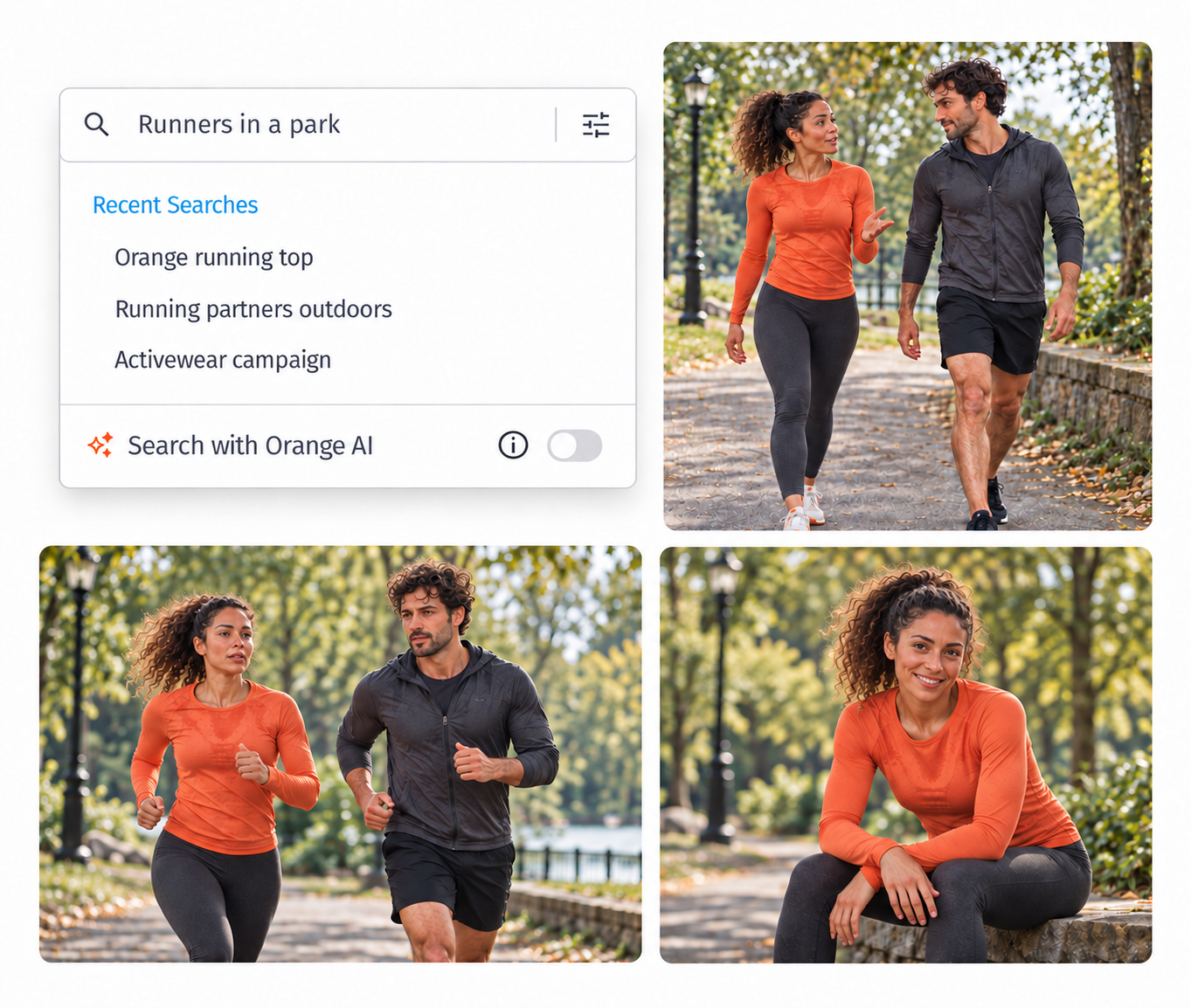

Search in Orange Logic’s DAM is based on a multi-engine approach that delivers subsecond response times across libraries.”

CONTENT-AWARE DISCOVERY
FIND WHAT'S INSIDE
THE CONTENT
The information people need is often buried inside an asset, not captured in its filename or metadata. Orange Logic makes the content itself discoverable across images, video, audio, and documents.
- Search what you can see. Find people, objects, environments, scenes, on-screen text, and visual concepts.
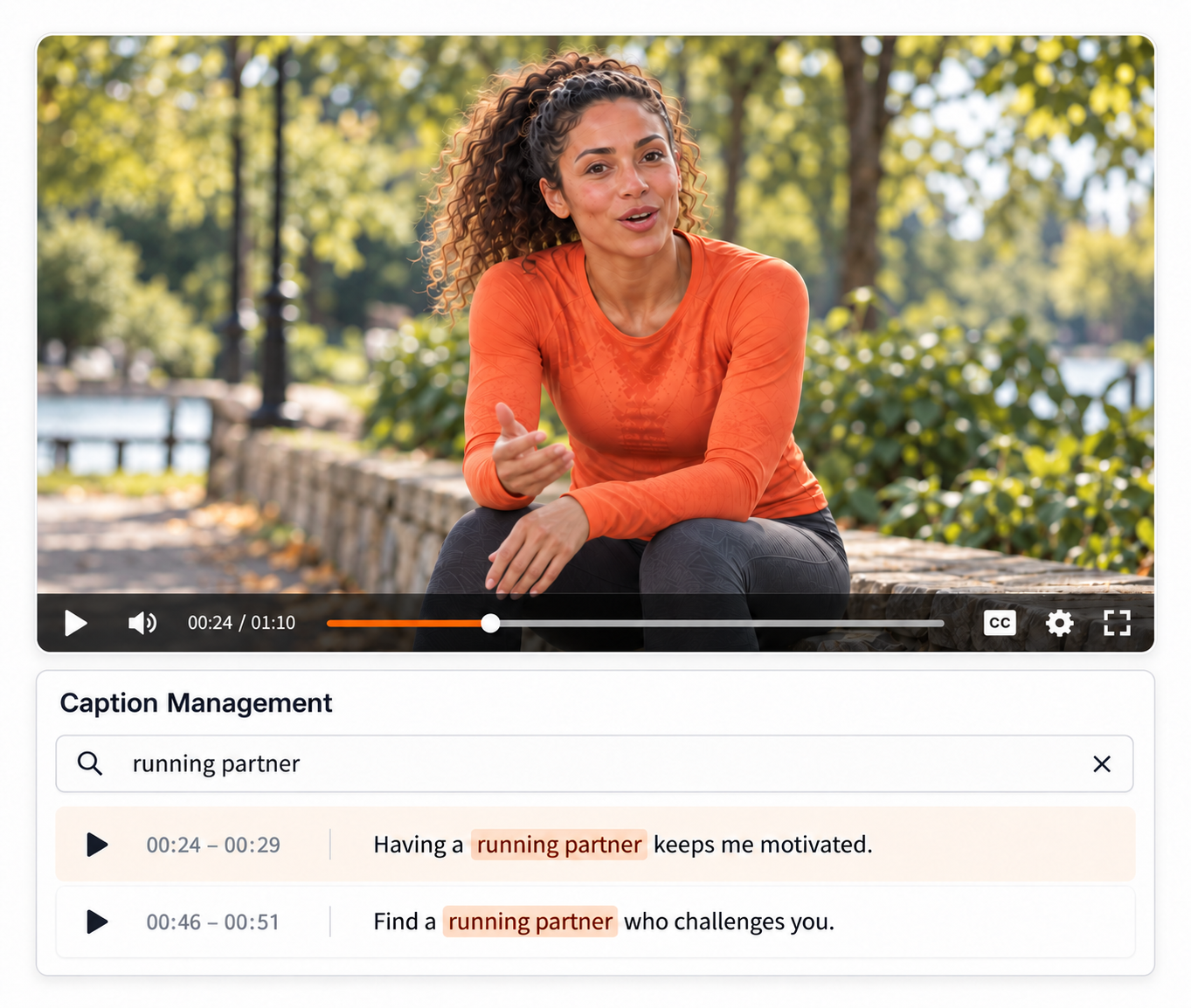
- Search what was said. Use speech and transcripts to uncover relevant content inside video and audio.
- Find the moment. Search within long-form media and surface the scenes and segments that match instead of stopping at the file.
Make more of the content you already own discoverable, even when nobody thought to tag what someone eventually searches for.
ADAPTIVE SEARCH INTELLIGENCE
THE SEARCH ADAPTS
TO THE QUESTION
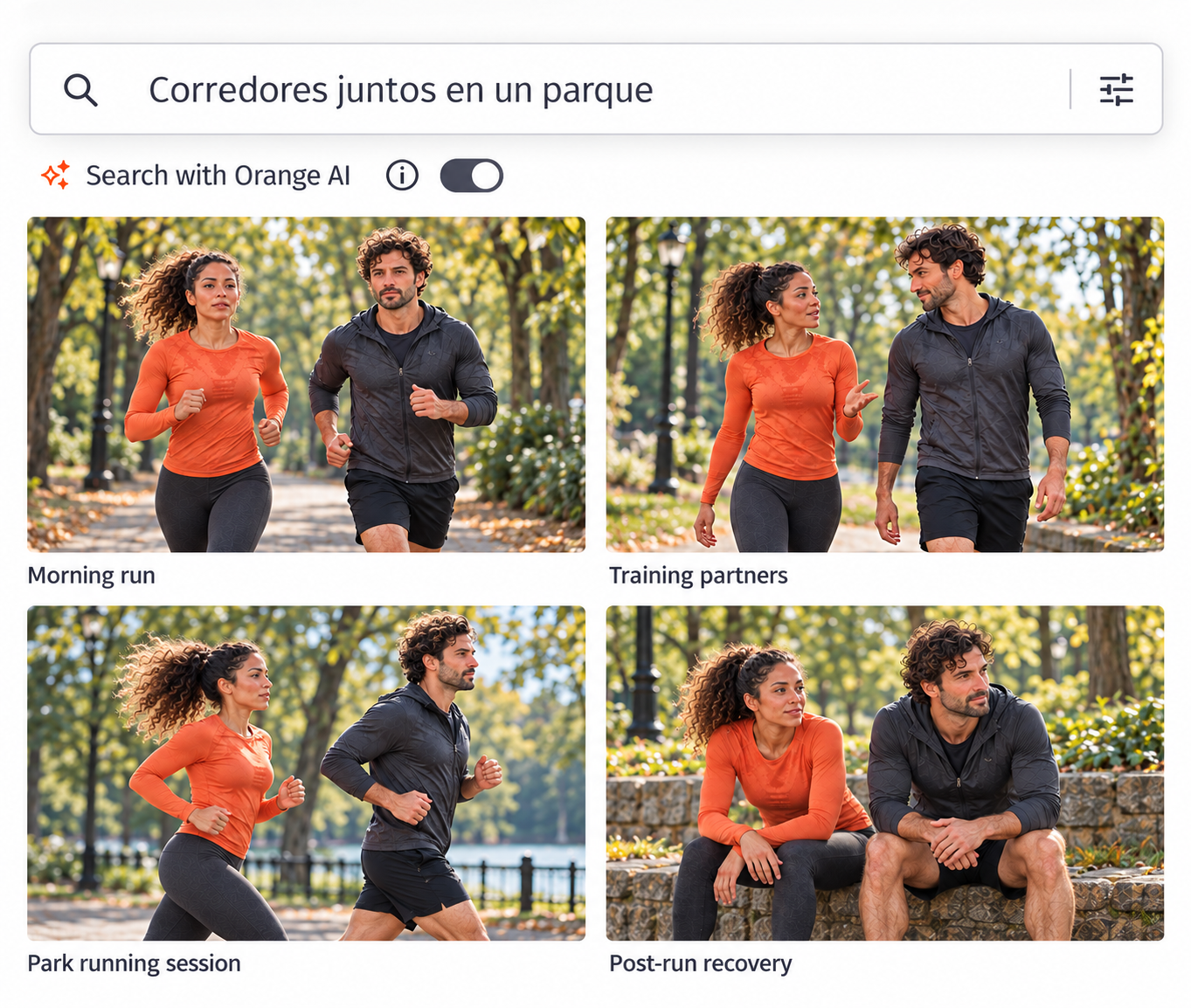
Different searches need different approaches. Orange Logic combines keyword, semantic, visual, language, and media intelligence so search can adapt to what the user is trying to find.
- Match the method to the question. Use the right search intelligence for exact, descriptive, visual, or contextual queries.
- Bring context into relevance. Combine meaning, metadata, and content understanding to improve results.
- Search globally at scale. Interpret intent across 80+ languages with sub-second performance across libraries exceeding 100 million assets.
The user asks the question. Orange Logic determines the best way to find the answer.
AGENTIC SEARCH
ASK FOR WHAT YOU NEED
THE AGENT HANDLES THE REST
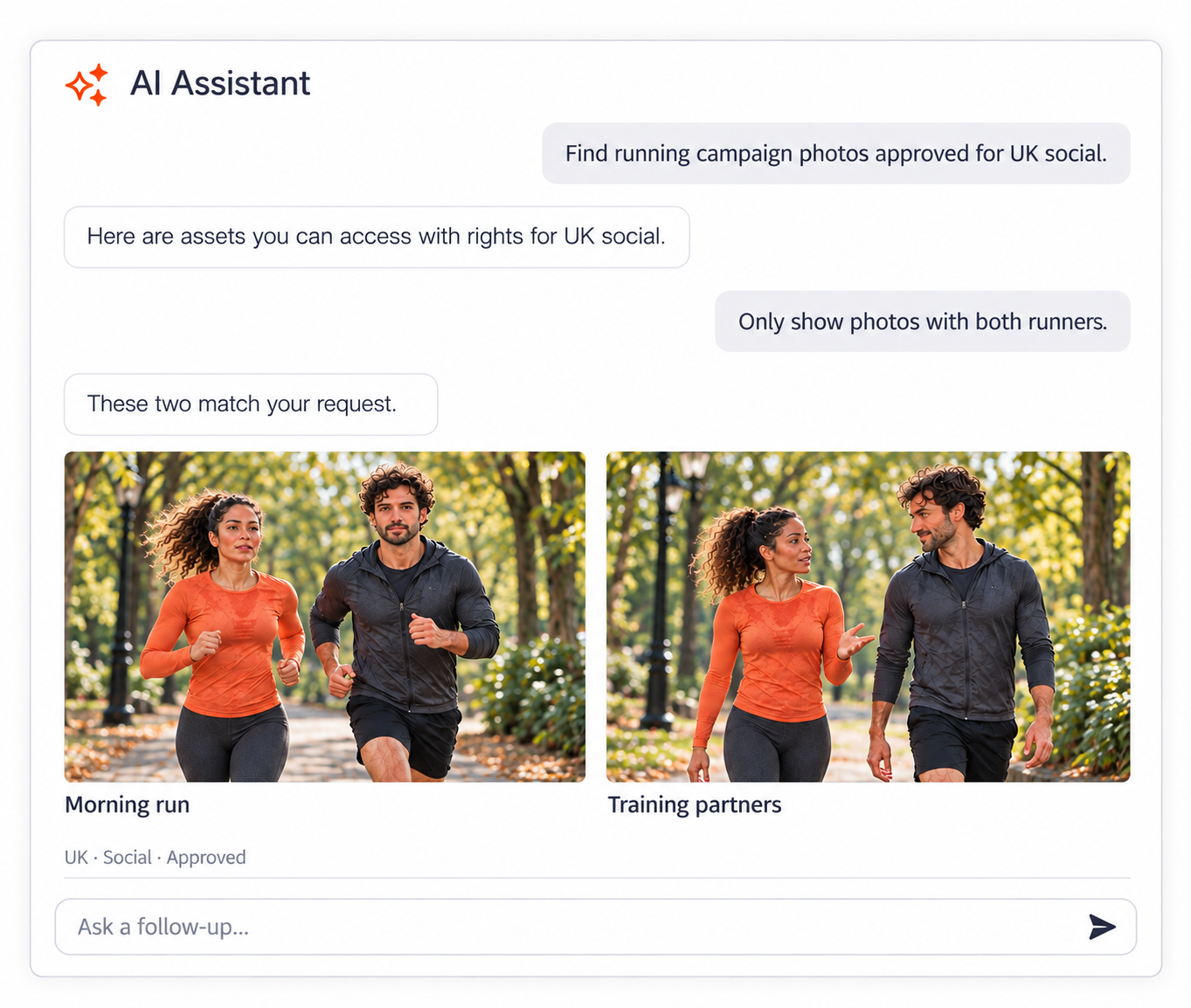
People should not have to learn your taxonomy, know which metadata field contains the answer, understand the filter structure, or search separately for the rights that govern an asset. The Orange Logic AI Assistant is a native agent that turns what someone is trying to accomplish into the searches, filters, permissions, and rights context needed to get there.
- Skip the DAM expertise. Let the agent navigate taxonomy, metadata, and filters for you.
- Ask the business question. Ask what is approved for a market, campaign, or use case and get results grounded in permissions and rights.
- Refine as you go. Add criteria or follow up naturally without rebuilding the search.
Tell the agent what you need. It handles how to find it.
SEARCH RELEVANCE
PUT THE RIGHT
CONTENT FIRST
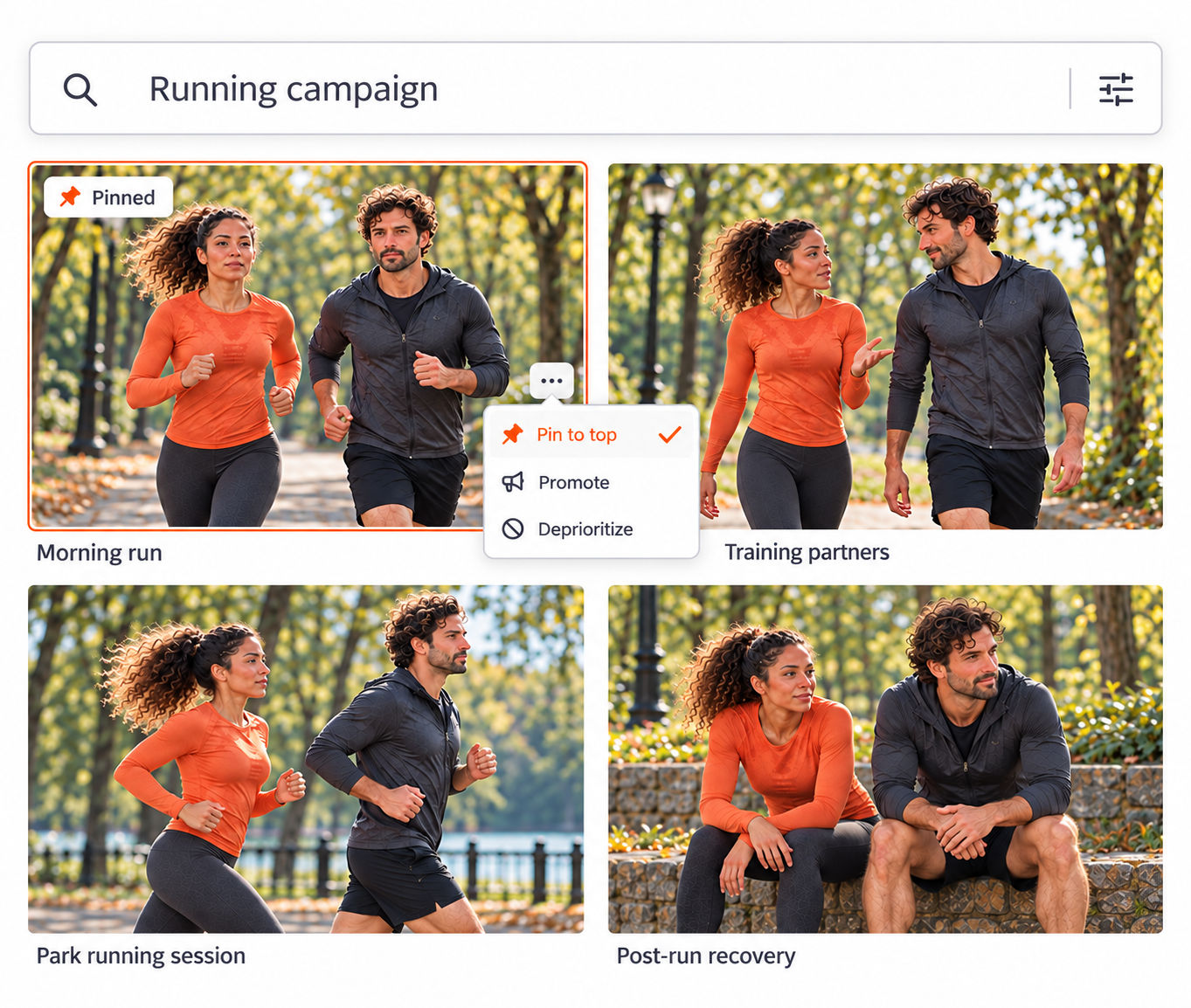
Finding a relevant asset somewhere in the results is not enough. Orange Logic gives teams control over how relevance is shaped so the content that matters most to the business rises when people need it, while search can continue adapting as content and user behavior change.
- Influence what rises. Promote, deprioritize, or pin assets based on what matters to the business.
- Balance the signals. Use metadata, relevance, engagement, and other signals to shape ranking.
- See what is being missed. Identify searches that return no results and use those insights to improve discovery.
- Reveal useful connections. Surface conceptually related content beyond assets that simply share the same explicit tags.
Make search reflect what matters to your organization, not just what an algorithm considers similar.
METADATA QUALITY
FIND CONTENT WHERE
THE WORK HAPPENS
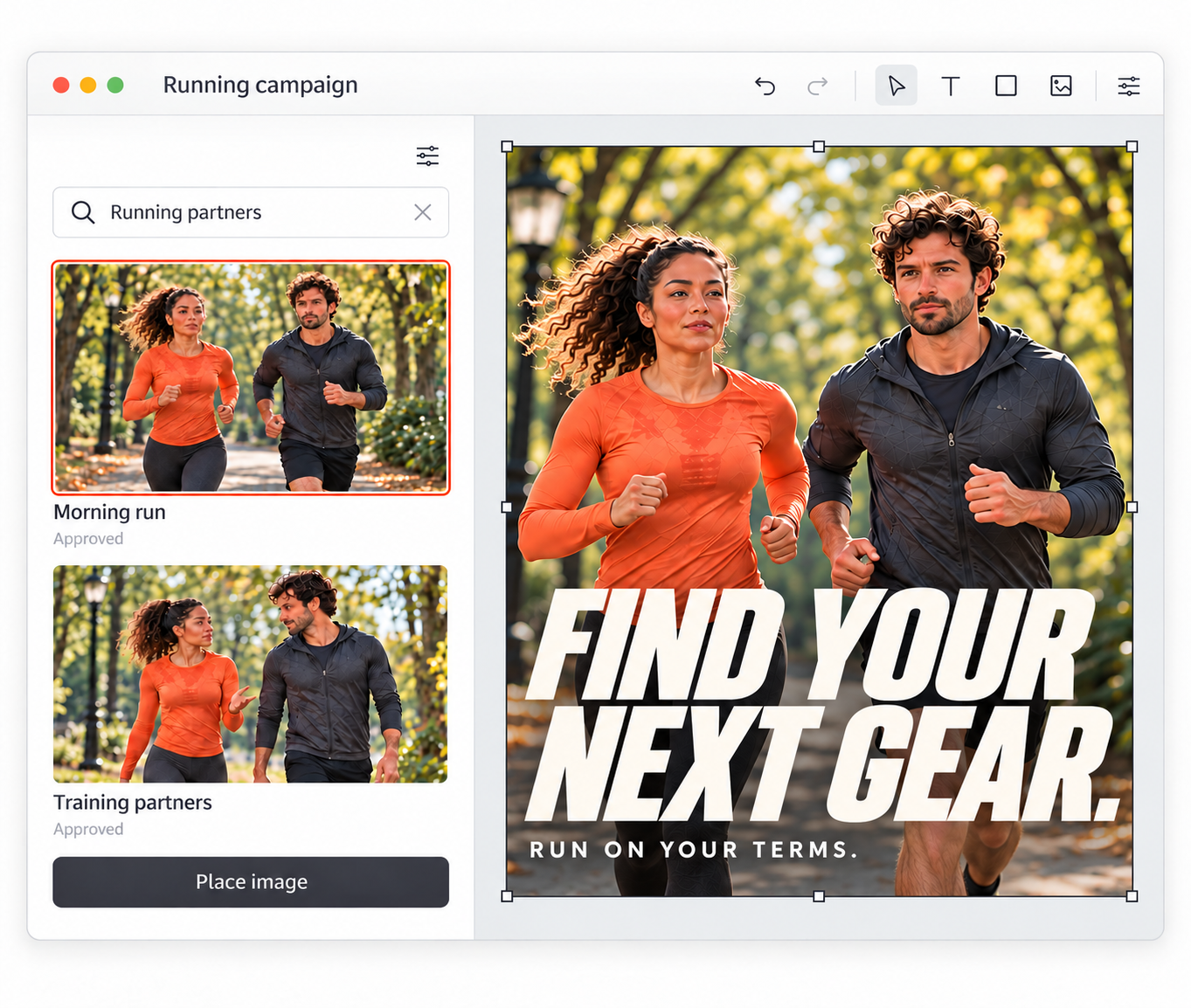
Bring governed Orange Logic search into the creative, publishing, business, and AI tools teams already use, while the DAM remains the source.
- Search without switching tools. Find and use DAM content directly in other applications.
- Embed the experience. Use SDKs and APIs to bring search, filtering, transformation, and delivery into existing workflows.
- Extend search to AI. Give agents and AI applications governed access to approved content and context through MCP.
Make search available wherever work happens, without creating another content silo.
CUSTOMER SUCCESS STORIES
See how teams make massive content libraries easier to find.

Case Studies
Pearson Scales to 40K API Calls a Minute
Pearson uses Orange Logic DAM and MAM to serve educational video at 40,000 API calls a minute.

Case Studies
AFI Opens Millions of Assets to Its Staff
With AI in its DAM, AFI opened millions of film assets to its whole staff for the first time.

Case Studies
Managing 20 Million Travel Assets with DAM
How one of the largest travel sites in the world manages 20 million assets with a DAM system.