Can a DAM automatically generate metadata for images and video?
Yes. Digital Asset Management (DAM) software automatically generates metadata for both images and video, using AI to analyze the asset itself and apply descriptive, searchable tags the moment it is uploaded with no manual input. Computer vision reads images and video frames for objects, scenes, themes, text, and brand logos; speech-to-text turns spoken audio into timestamped, searchable transcripts. That metadata is also the foundation for agentic content workflows that can act on your assets.
What is Automated Tagging in Digital Asset Management software?
Automated tagging in Digital Asset Management (DAM) software is the use of AI and machine learning to analyze digital assets, such as images, video, and audio, and generate descriptive metadata automatically, without manual input. Consistent tagging at ingest makes large libraries findable and ready for AI-driven workflows.
Why automated tagging matters
Consistent, accurate metadata isn't just an organizational win. It's what makes AI agents useful. When tags are rich and reliable, automated workflows can find the right asset, route it to the right team, and trigger the next step without anyone waiting in a queue. That's the shift from DAM as storage to DAM as content orchestration.
Automated tagging delivers on four fronts:
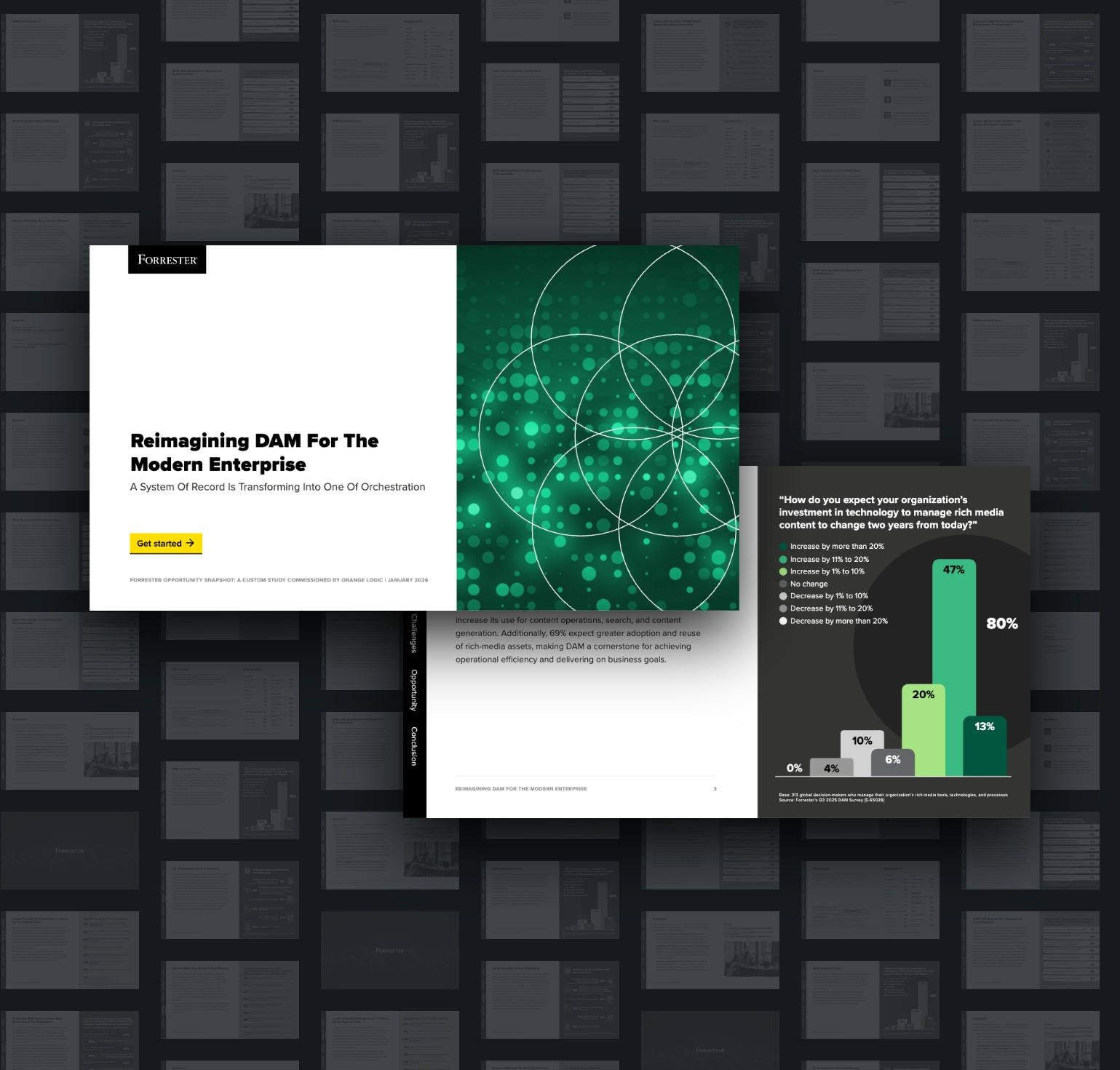
Efficiency. AI-driven tagging handles repetitive metadata creation so your team doesn't have to. According toForrester research commissioned by Orange Logic,, 36% of DAM leaders say AI agents for task and workflow automation will be among the most important DAM capabilities within two years. It starts here, with accurate tags.
Accuracy. Consistent metadata across thousands of assets reduces errors and enables governance at scale
Discoverability. Rich, AI-generated metadata improves search so teams find what they need, fast. 40% of DAM leaders name automated metadata tagging, accurate and specific to brand vocabularies, as one of the most important DAM capabilities two years from now(Forrester and Orange Logic).
Scalability. Whether you're managing 10,000 assets or 10 million, AI tagging grows with you, and the volume keeps climbing: three in four DAM decision-makers expect requirements for supporting new rich media to increase over the next two years (Forrester research commissioned by Orange Logic).
Key features of automated tagging
Content recognition. AI analyzes images, video, and audio to identify objects, faces, text, and sounds, generating relevant tags from the actual content of the asset. Orange Logic's auto-tagging, for example, detects objects, scenes, themes, text, and brand logos across images and video, drawing on multiple AI providers such as Google Vision, AWS Rekognition, and Azure Computer Vision. Orange Logic received the highest possible score for asset onboarding and metadata management in The Forrester Wave™: Digital Asset Management Systems, Q1 2026, where Forrester named it a Leader.
Metadata enrichment. Goes beyond basic labels to create detailed, structured descriptions that support better classification, filtering, and downstream use by both humans and agents.
Speech-to-text and multi-language support. For video and audio, AI transcribes spoken content into timestamped, searchable captions and transcripts, then translates them across languages for global teams managing assets across markets.
How automated tagging works in practice
Real-time processing keeps your library current without manual maintenance. And because the metadata is structured and consistent, it's ready to power the next generation of DAM workflows, including agentic pipelines that can:
- automatically route assets
- trigger approvals
- adapt content for different channels
- surface the right file at the right moment across enterprise systems
A few things to keep in mind about automated tagging
Three caveats are worth planning for:
Data quality matters. Clean, well-organized input produces better tagging output. Garbage in, garbage out applies here too.
Integration is worth planning. Automated tagging is most valuable when it connects cleanly to the rest of your content stack, including your CMS, PIM, and distribution tools.
Human review still has a role. Periodic audits keep tagging accurate and aligned with your brand vocabulary over time. The goal is to reduce manual work, not eliminate judgment.
The bottom line
Automated tagging makes DAM faster, more consistent, and more useful across every team that touches content. More importantly, it's the infrastructure that agentic content workflows depend on. Without accurate metadata, agents can't act intelligently. With it, your DAM stops being a place to store assets and starts being a system that works for you.